Choosing the right school shapes far more than exam results — it shapes how a child thinks, solves problems, and adapts to change. At MSR, educators built their approach around a simple premise: among stem education schools in Vijayawada, future skills should be treated as a daily habit, not a once-a-year science fair.
Introduction
Many parents worry that traditional classroom teaching alone will not prepare their child for a world shaped by technology, automation, and constant change, emphasizing the importance of STEM programs. It is a reasonable concern — memorizing formulas does not teach a child how to think through an unfamiliar problem. This is exactly why families searching for stem education schools in Vijayawada with a focus on future skills are asking sharper questions than they used to: does the school teach programming, or just mention it? Does it have working robot kits, or a locked cupboard of them? MSR approaches this by treating STEM as a way of thinking that runs through math, science, and everyday classroom activity, not a single subject bolted onto the timetable. This article looks at what this kind of learning actually builds in a child, how MSR applies it in practice, and what parents should look for when evaluating a school’s claims about the importance of STEM education.
STEM education combines science, technology, engineering, and mathematics into practical, hands-on work that builds problem-solving, critical thinking, and real-world skills children will need for future careers. At MSR, this includes coding, robotics, and an Atal Tinkering Lab where students apply concepts in real-life situations rather than only reading about them. Parents evaluating a school for future skills should look for consistent, practical exposure across grades, not occasional workshops, since real STEM growth is built through regular practice, not one-off events.
Why Does STEM Education Matter for a Child’s Future Skills?
It matters because it builds the kind of thinking children will actually need later — breaking down problems, testing ideas, and working through failure — rather than only recalling facts for an exam.
According to the World Economic Forum’s Future of Jobs Report, analytical thinking has consistently ranked as the single most important skill employers look for, alongside creative thinking, technological literacy, and adaptability. These are not abstract goals; they are exactly what STEM work builds when a child debugs a program, redesigns a robot build that failed, or works through a math problem with more than one possible approach. Indian schools that treat this area as an add-on rather than a core habit tend to produce students who can recite concepts but struggle to apply them, which is precisely the gap employers are now flagging as a global workforce concern.
Why Critical Thinking Matters More Than Memorization
A child who has memorized a formula can often solve the exact problem shown in a textbook. A child who understands the underlying logic can solve a problem that looks nothing like it, showcasing the strength of a strong foundation in STEM education. This approach deliberately builds the second kind of learner, which matters far more once a student reaches competitive exams, college, or a career in fields influenced by artificial intelligence.
How Does MSR Build STEM Skills Into Daily Learning?
MSR integrates STEM into regular coursework rather than isolating it to a lab period, so students build comfort with practical experimentation as a normal part of learning, empowering students to embrace real-world challenges.
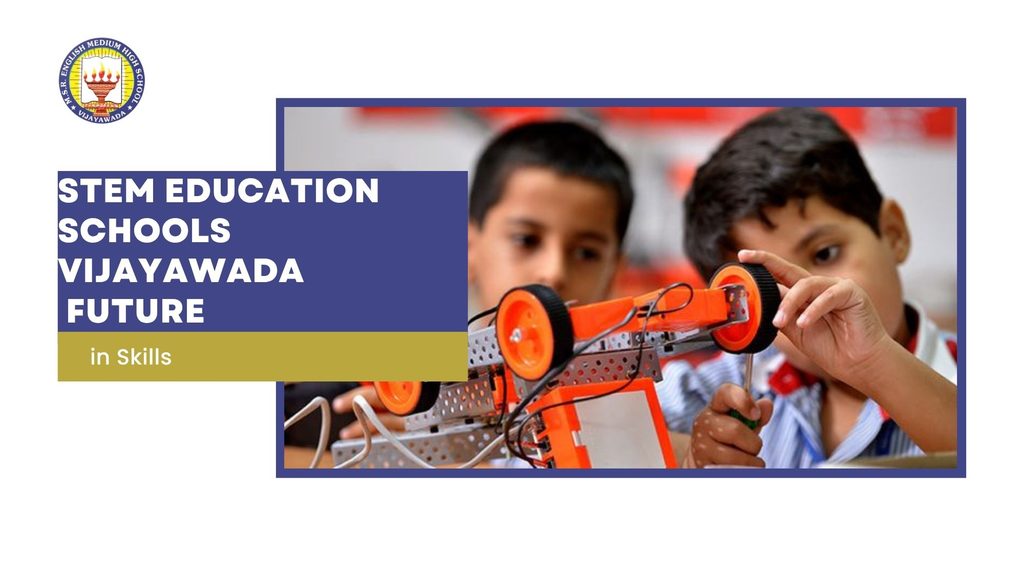
This includes structured programming lessons, practical lab sessions where students test ideas rather than only observe demonstrations, and math taught with an emphasis on structured thinking over rote calculation. The school’s Atal Tinkering Lab gives students access to robot-building equipment and prototyping tools so they can build, test, and redesign projects with real components rather than diagrams alone. Teachers are trained to encourage students to explain their reasoning, not just their answers, since the ability to articulate a solution is as valuable as reaching it, empowering students to navigate complex challenges.
How Robot-Building and Programming Build Practical Skills
These projects give students something a textbook cannot: immediate, visible feedback when something doesn’t work. A robot that doesn’t move or code that throws an error forces a student to isolate the problem and try again, which builds resilience alongside technical skill.
A student who has debugged their own code once understands more about persistence than a semester of lectures could teach them.
What Skills Does STEM Learning Actually Develop in Students?
It develops a specific, practical skill set: problem solving, structured thinking, working together, and the confidence to try an approach that might fail and adjust from there, which are essential for students for the future.
Writing code builds structured thinking and patience with iteration, essential skills for children in India to thrive in a technology-driven world. Building and testing machines adds collaboration, since most projects require more than one student working together under a shared goal. Math, taught well, builds the kind of logical reasoning that carries into every other subject, not just numerical ones. Together, these interdisciplinary experiences help students become confident innovators rather than passive recipients of information, which is precisely the shift NEP 2020 pushes for when it calls for experiential, skill-based learning over content-heavy memorization.
Why Practical Science Labs Build Deeper Understanding
Watching a demonstration and running an experiment yourself produce very different learning experiences that deepen understanding. When students measure, record, and interpret their own results, mistakes become part of the learning rather than something to avoid, which builds a more durable, applied grasp of scientific concepts.
STEM isn’t a subject we teach once a week — it’s the way we want students to approach every subject, including the ones that don’t look technical at all, highlighting the importance of STEM in their overall education.
How Should Parents Evaluate a School’s Science and Technology Programs?
Parents should look past the presence of a robot kit or a computer lab and ask how often students actually use them, since access alone does not build skills — consistent, guided practice does.
Useful questions include how frequently students get practical lab or programming time each week, whether these activities are graded and tracked like other subjects, and how the school supports students who find this unfamiliar at first rather than only showcasing the naturally confident ones. It’s also worth asking whether this learning connects to real-world applications — sustainable development projects, simple engineering challenges, or data-based problem solving — rather than staying abstract. A school genuinely committed to this approach will have specific, concrete answers, not general claims about being “tech-enabled.”
Traditional Science Teaching vs. MSR’s STEM Approach
| Traditional Science Teaching is often less effective than modern methods that incorporate STEM education in India. MSR’s STEM Approach | |
|---|---|
| Concepts taught mainly through textbooks | Concepts tested and applied through practical projects are crucial for developing a strong foundation in STEM education. |
| Programming introduced as an occasional activity does not provide the consistent learning experiences necessary for developing essential skills. | Programming built into the regular curriculum is essential for future-ready learning experiences. |
| Group work limited to occasional projects | Machine-building and lab work built around regular teamwork |
| Success measured by recall on exams | Success measured by applied problem solving |
| Tools and kits available but rarely used | Labs used consistently, with tracked progress |
What Recent Education Research Suggests
Independent research and national policy both point toward the same conclusion: hands-on, applied learning builds stronger engagement and more durable skills than passive instruction.
India’s National Education Policy 2020 explicitly calls for introducing coding from Class 6 “with fun and creativity,” alongside a broader shift toward experiential, hands-on learning and computational thinking across subjects — a move CBSE has since supported by rolling out programming and computational modules for Classes 6 to 8. Separately, the Atal Tinkering Lab initiative, run by the Atal Innovation Mission under NITI Aayog, has been expanded in phases to thousands of schools nationally, reflecting a national push to give students structured access to robot-building kits, 3D printers, and prototyping tools rather than treating this exposure as optional. On the workforce side, the World Economic Forum’s Future of Jobs Report identifies analytical thinking, creative thinking, and technological literacy as the fastest-growing skill priorities for employers globally. Separately, peer-reviewed research on high-school robot-building courses, including a study published via the U.S. National Institutes of Health, documents measurable gains in student engagement and applied skill-building during hands-on work. Together, these findings support what MSR applies in the classroom: these skills grow through consistent, applied practice in STEM programs, not occasional exposure, establishing a strong foundation for future success.
Why Is Early Exposure Important for Young Learners?
Introducing these concepts at an early age helps children build comfort with experimentation and failure before academic pressure makes them afraid to get things wrong, nurturing their growth in essential skills.
Younger students who regularly build, test, and redesign simple projects develop curiosity as a habit rather than a personality trait reserved for a few naturally inclined children, highlighting the importance of STEM education for children in India. This matters because confidence with practical problem solving, once lost to fear of failure, is harder to rebuild later. MSR introduces age-appropriate activities from the primary years, so that by the time students reach advanced analytical challenges or programming projects, the underlying comfort with trial and error is already established.
How MSR Prepares Students for Science-Focused Career Paths
Students aiming toward engineering, medicine, or data science benefit from early, consistent exposure to lab work and applied math, since these fields reward comfort with practical problem solving as much as theoretical knowledge. MSR structures its science programs to build this foundation gradually, rather than introducing rigor only in the senior years.
The students who go on to thrive in engineering or research aren’t always the ones with the highest marks — they’re the ones who were never afraid to take something apart and rebuild it, nurturing their essential skills.
Conclusion
STEM education is not about adding a robot kit to a shelf or a coding class to a timetable — it is about building the essential skills of thinking that help a child solve problems they haven’t seen before. MSR applies this consistently across math, science, programming, and its Atal Tinkering Lab, so that practical problem solving becomes a normal part of a student’s school experience rather than an occasional highlight. For parents evaluating stem education schools in Vijayawada with future skills in mind, the more useful question isn’t whether a school owns the right equipment, but how consistently students actually use it. That consistency, more than any single tool or lab, is what prepares a child for a future that will keep changing after they leave school.
Frequently Asked Questions
What is the future of STEM education?
This field is expected to grow in importance as more careers require comfort with technology, data, and applied problem solving rather than routine tasks. Schools that build programming, machine-building, and practical science into daily learning are positioning students for a future-ready approach rather than reacting to it later.
What skills does this kind of learning develop?
It develops problem solving, critical thinking, structured reasoning, and collaboration, along with comfort with trial and error. These skills extend beyond science and math into how a student approaches challenges in any subject or situation.
Is this approach worth it for my child?
Yes, when it is taught consistently rather than as an occasional activity. Children who regularly practice applied problem solving tend to build stronger analytical skills and more confidence tackling unfamiliar challenges than those who only study these subjects through textbooks.
Does MSR align this approach with the CBSE curriculum?
Yes, MSR integrates STEM activities, programming, and its Atal Tinkering Lab alongside the standard CBSE curriculum, rather than treating them as separate from core academics. This allows the approach to reinforce classroom concepts rather than compete with them for time.
What is an Atal Tinkering Lab and does MSR have one?
An Atal Tinkering Lab is a government-supported facility, run under NITI Aayog’s Atal Innovation Mission, that gives students access to robotics kits, 3D printers, and prototyping tools. MSR operates its own STEM labs, giving students structured, practical access to these tools as part of regular school life.
At what age should children start learning STEM concepts?
Children benefit from age-appropriate exposure from the primary years, since early comfort with building, testing, and solving problems tends to carry forward into more advanced work later. Waiting until secondary school often means students have to first unlearn a fear of getting things wrong.
How can parents tell if a school’s science and technology program is genuine or just marketing?
Ask specific questions: how often do students actually use the labs or programming tools each week, is progress tracked like other subjects, and can the school describe real student projects rather than general claims. A genuine STEM program will have concrete, specific answers that empower students to engage with real-world problems.
What do parents and students say about stem education schools in Vijayawada?
Feedback from families generally centers on whether tools and labs are used consistently and whether children show growing confidence and interest over time, rather than on the equipment alone. Parents are encouraged to speak with current families directly when evaluating any school’s program.
Does coding count as part of this approach at the school level?
Yes, writing code is a core part of it and is introduced from the middle years under national policy guidance, teaching students computational thinking alongside traditional subjects like math and science.
How does this kind of learning support future career readiness?
It builds the analytical thinking, technological literacy, and adaptability that employers consistently rank among the most important skills for the future workforce, ensuring future success for students. Students who practice these abilities early are better prepared for careers that continue to change after they enter them.