MSR School’s work with Dell Technologies gave its own students hands-on exposure to science and technology years before most peers encounter it. This article looks at what that collaboration involved and why India needs more girls choosing science.
Parents researching a Dell-linked school in India are usually trying to answer a narrower question: does this actually change how confidently a daughter approaches science, or is it just a logo on a website? MSR School’s Atal Tinkering Lab hosted a Dell-backed effort under the theme “women in science,” selecting 30 girls from classes VI, VII, and VIII for structured training. The point wasn’t a single workshop; it was consistent hands-on time that could shape how a student sees herself in a lab, a workshop, or a future she hasn’t pictured yet. This piece looks at what that work involved, the wider push behind it, and how families can carry the same momentum forward — a distinction worth weighing for any family enrolling a daughter this year, well beyond this one effort.
Quick Answer for Parents
MSR School’s Dell programme trained 30 girl students of classes VI, VII, and VIII through its Atal Tinkering Lab, focused on scientific temperament and innovative thinking among girls pursuing science. It sits within a broader push — including a flagship government scheme for girls in science and Dell’s own global work — to close the gender gap in STEM before it hardens into a hiring-stage problem. Parents evaluating a school on this basis should look for consistent, hands-on access rather than a single showcase event.
What Did MSR School’s Dell Collaboration for Girls Actually Involve?
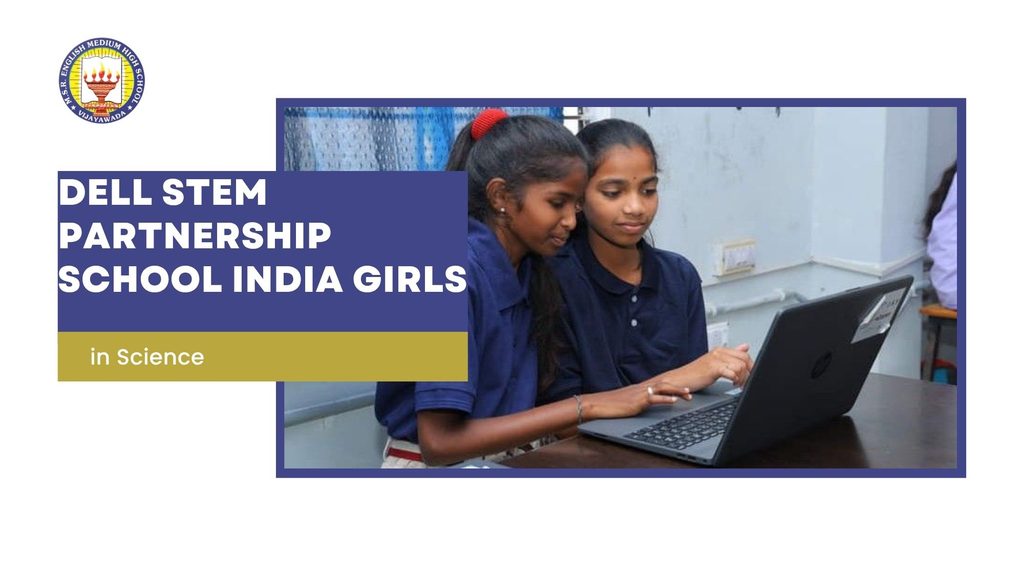
MSR’s work with Dell ran through its Atal Tinkering Lab, a national hands-on science initiative already active on campus, rather than as a standalone corporate visit. The school selected 30 girls across classes VI, VII, and VIII for structured training under the theme “women in science,” designed to run over one to two years rather than a single afternoon, aiming to foster scientific temperament in future innovators rather than deliver a one-time demonstration.
The goal was to empower girls with real STEM education at an age when many students quietly opt out of science-heavy electives later on. Selected groups also had a path to financial assistance at the national level for strong project ideas, giving the effort real stakes beyond ordinary schoolwork — one small, concrete example of what it looks like to become leaders in STEM starting in middle school rather than college.
How Did the Dell-Backed Effort Support MSR’s Students?
The work leaned on MSR’s existing lab, the same space students use for hands-on building and experimentation, rather than requiring a separate facility. That mattered practically: it gave the selected group early exposure and structured guidance without leaving their own campus or daily routine.
It also modeled something schools often struggle to teach directly: that learning outside the classroom, with real tools and real deadlines, feels different from science as a textbook subject. For many of the 30 girls involved, this was their first sustained project of any kind.
MSR Educator Insight
A one-off science event rarely changes a girl’s confidence — what does is watching her build something over months, with real feedback, in a room she already knows.
Why Does India Need More Girls Choosing STEM?
India needs more girls in STEM because participation drops sharply after school, long before it becomes a hiring-stage statistic — a pattern the government’s flagship gender-parity scheme aims to interrupt. It wants to bring gender parity across science and technology by increasing girls’ representation from school through research levels, working through Jawahar Navodaya Vidyalayas and expanding, in a second phase confirmed via a Press Information Bureau release, from 50 to 100 districts nationally.
Prof Ashutosh Sharma, then Secretary of the Department of Science and Technology, headquartered in New Delhi, said at the time that he hoped the effort would keep expanding across the country, supporting women and helping increase the number of women in the country’s top science institutes. DST’s underlying goal is direct: we want more girls choosing science before stream selection closes that door.
What Is the Government of India Doing to Get More Girls Into Science?
That scheme is one piece of a wider push: government schools, research bodies, and now private-sector partners like Dell are each targeting a different point where girls tend to step back from science — middle school, senior secondary stream selection, undergraduate admissions, and eventually a research lab or industry role. The India Science, Technology and Innovation portal lists it alongside several parallel efforts, reflecting how systemic this gap actually is.
For a family in Vijayawada, the practical takeaway is that a school-level effort isn’t happening in isolation — it connects to a national ecosystem built around inclusion that is, slowly, changing what “normal” looks like for a girl choosing her stream after Class 10.
How Does Dell Support Science Learning Around the World?
Dell supports STEM learning globally through Girls Who Game (GWG), built with Microsoft and Intel, which uses Minecraft and esports-style challenges to teach practical skills to students everywhere. The stated aim is computational thinking, critical thinking, creativity, and problem-solving through play rather than lectures — an approach the company has also backed through investment in computer science education for girls in underserved communities in recent years.
That pattern lines up with what happened locally at MSR: Dell’s involvement wasn’t limited to donating equipment. It centred on skills-based training aimed specifically at girls, whether that’s a game-based challenge abroad or a lab project in Vijayawada — one small piece of the industry’s broader #STEMEducation push, where the underlying goal echoes DST’s own: giving girls science exposure before graduation forces a narrower set of options.
What Skills Do Programs Like This One Build?
It is explicit about the skills it targets: teamwork, resourcefulness, and the confidence that comes from finishing a real project rather than a worksheet. Programs that emphasise doing over memorising tend to produce students who describe themselves as capable in science, not just compliant with it.
That distinction — capable versus compliant — is why support from a trusted adult matters as much as access to a lab, and why efforts to support women and girls in stem fields tend to start young rather than waiting until college.
MSR Educator Insight
A skill like breaking down a hard problem transfers far beyond a single subject — a student who learns to break a challenge into steps in one activity applies the same habit in any subject, in a science lab, and later in almost any career.
What Role Does MSR’s Atal Tinkering Lab Play in Learning?
MSR’s Atal Tinkering Lab gives students, including those trained under the Dell effort, hands-on access to coding, robotics, and early artificial intelligence concepts as part of a national hands-on learning programme rather than an optional add-on. The lab’s stated aim is to help students become responsible, innovative thinkers, which fits naturally with the “women in science” focus of the 2021 cohort.
Beyond that specific effort, the lab supports ongoing digital literacy and hands-on practice for each student across grades, giving MSR a digitally-enabled setting that doesn’t depend on any single outside partner to keep functioning. Explore MSR’s campus facilities to see where this kind of work actually happens.
What Should Parents Compare Before Choosing a Science-Focused School?
What Should Parents Compare Before Choosing a Science-Focused School?
| Factor | Basic Evaluation | Informed Parent Evaluation |
|---|---|---|
| Lab Access | Checks if a computer lab exists | Assesses whether girls get equal hands-on project time |
| Outside Partners | Counts logos on the school website | Looks at what students actually built or learned |
| Consistency | Focuses on one showcase event | Checks whether exposure repeats across the year |
| Guidance | Assumes any teacher can guide a project | Confirms dedicated support for science work |
| Long-Term View | Stops at exam results | Considers how hands-on time connects to what comes next |
What Does Recent Research Suggest About Girls in Science?
Research and government reporting consistently point to the same pattern: girls perform comparably to boys in school-level science, yet their proportion drops sharply at stream selection, undergraduate enrolment in technical fields, and again in the research and development workforce. India already produces large numbers of STEM graduates each year, but the share who identify as women in STEM narrows at every stage that follows. Programmes like this exist precisely because that drop-off is structural rather than a matter of individual aptitude — it reflects a shortage of visible examples to follow rather than any real gap in ability.
Efforts that intervene early, before Class 10 stream selection, appear to have more lasting effect than those aimed only at university or hiring, since aspiration and self-belief tend to form years before a formal decision gets made. That’s the underlying logic behind pairing a school-level effort like MSR’s with a national push of this kind rather than relying on either alone — and why so much of this work now aims to be genuinely inclusive of women in technology, not just enrolling them in a course.
How Can Parents Encourage Girls to Pursue Science Careers?
Parents can encourage a daughter toward a stem career by treating exposure as routine — normal weekly activity, not a rare event tied to a single visiting partner. Consistent access to hands-on projects and open-ended problem solving does more for a girl’s ambition than an occasional fair, because it signals that a career in STEM is something she genuinely belongs in, not just on special occasions.
Support from a trusted adult matters just as much as access to equipment. A girl who sees a female teacher, mentor, or older student comfortable with computers absorbs a message no worksheet can teach on its own. Discover student life at MSR to see how these activities fit into everyday school life.
Why Do Role Models Matter So Much?
They work because a role model replaces abstract encouragement with a specific, visible example: someone who looks like the student, doing the work she’s being asked to imagine herself doing. A girl with even one such mentor tends to describe science subjects with noticeably more confidence than one who only meets them through a textbook.
For families, this means asking a school directly whether structured guidance exists, not assuming that lab access alone produces it. It also means removing a subtler barrier: the quiet, still-common assumption that certain subjects are simply “for boys.”
MSR Educator Insight
Every girl in a science classroom needs the same thing: a teacher who expects her to build something real, and enough time to actually try before being judged on the result.
How Does MSR Prepare Students for What Comes After School?
MSR connects early lab experience — science, technology, engineering and mathematics practiced together rather than as separate subjects — to the kind of thinking higher education institutions and employers actually look for. Whether a student eventually becomes an engineer, a researcher, or a technologist working somewhere entirely different, that early habit of building and testing ideas tends to transform how she approaches every subject afterward, not just the technical ones.
By senior secondary classes, this foundation makes stream selection feel less like guesswork. A student with real exposure since middle school, rather than one meeting a lab for the first time in Class 11, generally approaches that decision with more clarity about what she actually enjoys, not just what she’s expected to choose. Learn more about MSR’s academics and how this kind of work connects to the Atal Tinkering Lab.
A Foundation Worth Building Early
MSR School’s Dell effort was never framed as the single reason a student succeeds in science — it was one deliberate piece of a longer effort to strengthen how girls in Vijayawada see themselves in a lab, a school hallway, or eventually a career. That effort mirrors what’s happening nationally, from a government scheme’s steady nationwide growth to Dell’s own programming, and it points toward the same conclusion heading into 2025 and beyond: consistent, hands-on access, not isolated events, is what actually moves the needle for female students in this century.
For families weighing where a daughter should build that 21st-century foundation, the questions worth asking go beyond whether a school has hosted an outside partner once. They should ask whether access is routine, whether mentorship exists, and whether the school treats a girl’s interest in science as something to nurture continuously rather than showcase occasionally. Explore MSR Admissions to learn more about upcoming sessions, or reach the MSR contact team with specific questions about this year’s intake.
Reading More on What Vijayawada Families Ask About Schools
Beyond this specific effort, many parents comparing MSR against other options in the city also research curriculum, stream choice, and long-term academic planning. CBSE Class 11 Admissions in Vijayawada Now Open — Choose the Right Stream Today covers exactly that decision point for families whose daughters are approaching Class 10 stream selection.
For younger families still weighing their very first school choice, Primary School in Vijayawada Focused on Strong Foundations — Enroll Your Child Today walks through what an early, well-rounded start actually looks like, including where hands-on activity fits into a young learner’s week.
Parents specifically weighing hands-on, extracurricular work alongside academics may also find How Schools in Vijayawada Use Extra Curricular Activities to Build Skills useful, since it covers the same idea of learning beyond the textbook that runs through the Atal Tinkering Lab.
Frequently Asked Questions
What was MSR School’s Dell programme about?
MSR School worked with Dell through its Atal Tinkering Lab to train 30 girls of classes VI, VII, and VIII under a “women in science” theme, focused on scientific temperament and innovative thinking among students.
How many students were part of the MSR-Dell effort?
Thirty students across classes VI, VII, and VIII were selected for the structured training, designed to run over one to two years rather than as a single workshop.
What is Vigyan Jyoti, and how does it relate to school-level work?
It is a DST scheme aimed at getting more girls into science by expanding participation from school through research levels, implemented through Jawahar Navodaya Vidyalayas across an expanding part of the country.
What is Dell’s global gaming-based science programme?
It is a global Dell effort built with two other major companies that uses game-based challenges to teach science skills, including teamwork and analytical thinking, to students worldwide.
Does MSR School have an Atal Tinkering Lab?
Yes. MSR School hosts an Atal Tinkering Lab, a national hands-on learning setup that gives students access to building and applied science projects, including the cohort trained under the Dell effort.
Why do girls in India tend to drop out of science subjects over time?
Research and government reporting both point to structural rather than ability-based reasons — a lack of people to look up to and limited support — rather than any real difference in how girls perform in school-level science subjects.
How can parents support a daughter interested in science at home?
Parents can treat exposure as routine by encouraging hands-on projects, connecting a daughter with mentors in relevant fields, and asking her school directly whether structured guidance and lab access exist beyond a single yearly event.
Does MSR School offer science learning opportunities beyond the Dell programme?
Yes. MSR’s Atal Tinkering Lab supports ongoing hands-on and applied work for students across grades, independent of any single outside partner, as part of the school’s broader academic offering.
Is a school’s technology partnership a good reason to choose it?
It can be one useful signal, but parents should look beyond that single effort to whether access is consistent, whether guidance is structured, and how the school connects hands-on exposure to later stream choices.
How can I get more information about MSR School’s programmes?
Families can review MSR’s academic programmes and campus facilities on the school’s website, or reach the admissions team and contact page directly for current-session details.