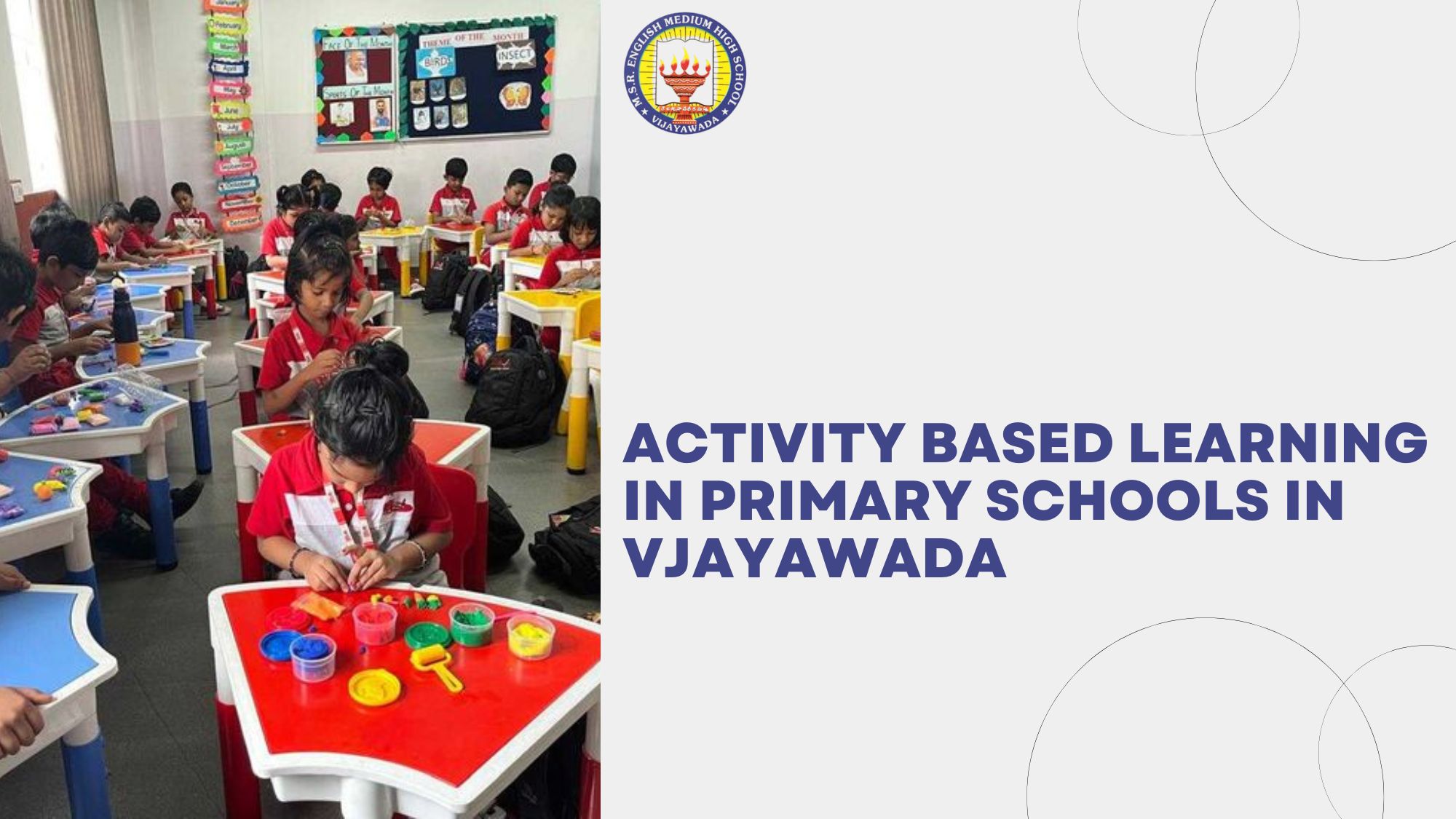
Parents today are increasingly looking for learning approaches that help children understand concepts deeply rather than simply memorize information. At MSR, we regularly guide families exploring Activity Based Learning in Primary Schools in Vijayawada because interactive learning experiences often improve engagement, knowledge retention, and overall student development during the most important years of education.
Introduction
Many parents notice that children can sometimes remember information for an exam but forget it shortly afterward. This often raises an important question: Is the child truly learning or simply memorizing? During the primary years, children learn best when they are encouraged to explore, participate, ask questions, and discover concepts through practical experiences. Traditional classroom methods may not always support the natural way young learners absorb knowledge.
This is why Activity Based Learning in Primary Schools in Vijayawada is becoming increasingly popular among parents seeking quality primary education. Activity-based learning encourages children to engage actively with lessons through hands-on experiences, collaborative learning, and interactive classroom activities. At MSR, we believe that meaningful learning happens when children are involved, curious, and motivated. Such an approach supports academic growth and development while strengthening confidence, communication skills, and overall student engagement.
Activity-based learning helps children learn faster because they participate directly in the learning process. Through hands-on learning activities, practical experiences, and interactive classroom engagement, students often understand concepts more clearly, remember information longer, and stay motivated throughout their educational journey.
Why Is Activity Based Learning Becoming More Important in Primary Education?
Primary education lays the foundation for a child’s future academic success. During these formative years, students develop learning habits, communication abilities, curiosity, and confidence that influence their entire educational journey. Because young children learn best through observation, experimentation, and interaction, activity-based learning has become an important component of modern educational practices.
Parents searching for the Best Primary School in Vijayawada increasingly look for schools that create active learning environments where children can participate meaningfully in lessons. Rather than simply listening to information, students engage directly with concepts through activities, projects, discussions, and practical experiences that encourage deeper understanding.
Learning Through Activities Creates Better Understanding
Learning through activities helps children connect ideas with real experiences. Instead of memorizing facts, students explore concepts through participation, observation, and experimentation. This process often leads to stronger understanding and greater confidence in applying knowledge.
Hands-on learning activities also encourage curiosity. When children discover answers through exploration, they become more engaged learners who are motivated to continue asking questions and seeking knowledge.
Supporting Holistic Development Through Active Learning
Activity-based learning contributes to much more than academic achievement. Students develop communication skills, teamwork abilities, confidence, and problem-solving skills while participating in classroom activities. This holistic learning approach supports both intellectual and personal growth, helping children become more capable, independent, and enthusiastic learners.
“Children learn most effectively when they actively participate in the learning process. Engagement and exploration often create stronger understanding than memorization alone.”
Explore MSR KG & Primary Programs
Discover how MSR creates an engaging, activity-rich learning environment for young learners in Vijayawada.
Explore KG Programs →How Does Activity Based Learning Help Children Learn Faster?
Young learners often absorb information more effectively when they can see, touch, discuss, and experience concepts directly. Traditional learning methods may sometimes require students to absorb information passively, while activity-based approaches involve students in meaningful educational experiences that improve understanding.
Interactive learning methods help students connect with lessons more naturally. When children actively participate in activities, discussions, and practical exercises, they often understand concepts more quickly because learning becomes relevant, enjoyable, and memorable.
Interactive Classroom Activities Increase Engagement
Student engagement in primary education plays a major role in learning outcomes. Children who are interested in classroom activities are more likely to focus, participate, and retain information. Interactive classroom activities encourage students to become active contributors rather than passive observers.
Activities such as group projects, role-playing exercises, educational games, and hands-on experiments create excitement around learning. This enthusiasm often translates into better understanding and faster learning outcomes.
Experiential Learning Builds Strong Connections
Experiential learning for children helps students understand why concepts matter by connecting lessons with practical experiences. Rather than learning information in isolation, students see how knowledge can be applied in different situations. This process strengthens concept-based learning and helps children build stronger mental connections, allowing them to understand and remember information more effectively.
Why Does Activity Based Learning Improve Knowledge Retention?
One of the biggest challenges in education is ensuring that students remember what they learn long after a lesson has ended. Many children can memorize information temporarily but struggle to retain it over time. Activity-based learning addresses this challenge by encouraging deeper interaction with educational content.
When students actively participate in learning, they create stronger mental connections with concepts. These connections help improve recall and make it easier for students to apply knowledge in future situations.
Learning by Doing Strengthens Memory
Learning by doing is one of the most effective learning retention techniques. When children perform activities, conduct experiments, solve problems, or create projects, they engage multiple areas of the brain simultaneously. This active involvement helps students remember concepts because the learning experience becomes meaningful and memorable.
Concept-Based Learning Encourages Long-Term Understanding
Concept-based learning focuses on helping students understand the reasons behind ideas rather than memorizing information without context. When children understand concepts deeply, they are more likely to retain and apply knowledge effectively. This approach supports improved knowledge retention while also developing critical thinking skills and problem-solving abilities that benefit students throughout their academic journey.
“Students remember information longer when learning is meaningful, interactive, and connected to real experiences rather than focused solely on repetition.”
Discover MSR Academics
Learn how MSR’s academic programs combine structured learning with hands-on exploration for stronger outcomes.
Explore Academics →How Does Activity Based Learning Keep Students Engaged in the Classroom?
One of the biggest challenges in primary education is maintaining student attention throughout the learning process. Young children are naturally curious and energetic, making it difficult for them to remain engaged in purely lecture-based environments. Activity-based learning addresses this challenge by encouraging participation and making learning enjoyable.
When students become active participants rather than passive listeners, they develop greater interest in classroom activities. This increased engagement often leads to better understanding, stronger motivation, and more positive attitudes toward learning.
Interactive Learning Creates Active Participation
Interactive classroom activities encourage students to ask questions, discuss ideas, and work collaboratively with classmates. These experiences make lessons more dynamic and help students stay focused for longer periods. Student participation also helps children feel more connected to the learning process. When students contribute ideas and actively solve problems, they become more invested in their education.
Fun Learning Activities Build Motivation
Fun learning activities for children transform education into an enjoyable experience. Educational games, projects, storytelling, role-playing, and collaborative exercises help students associate learning with excitement rather than pressure. As a result, students often demonstrate higher levels of motivation and engagement. This positive attitude supports academic growth and development while encouraging lifelong learning habits.
“Children remain engaged when learning is interactive, meaningful, and connected to their natural curiosity about the world around them.”
What Should Parents Look for When Evaluating Activity Based Learning Schools?
Not all schools implement activity-based learning in the same way. Some institutions may use occasional activities, while others build interactive learning into the entire educational experience. Parents should look beyond marketing claims and understand how learning actually takes place within classrooms.
A quality primary school should provide opportunities for experiential learning, student participation, collaborative learning, and concept-based instruction while maintaining strong academic standards.
Comparison: Traditional Learning vs Activity Based Learning
| Learning Area | Traditional Learning | Activity Based Learning |
|---|---|---|
| Student Role | Passive Listener | Active Participant |
| Learning Method | Memorization | Learning by Doing |
| Engagement Level | Moderate | High |
| Knowledge Retention | Short-Term | Long-Term |
| Critical Thinking | Limited Opportunities | Strong Development |
| Communication Skills | Occasional Practice | Continuous Development |
| Collaboration | Less Frequent | Regular Teamwork |
| Problem Solving | Teacher-Led | Student-Led Exploration |
| Classroom Experience | Lecture Focused | Interactive Learning |
| Student Motivation | External Encouragement | Natural Engagement |
Parents exploring an English Medium Primary School in Vijayawada, a CBSE Primary Education in Vijayawada program, or a Modern CBSE Affiliated School in Vijayawada should carefully assess these factors during school visits.
What Does Recent Education Research Suggest About Activity Based Learning?
Educational studies worldwide continue to highlight the benefits of student-focused education and experiential learning for children. Research suggests that students who actively participate in learning experiences often achieve stronger academic outcomes than those who rely solely on passive learning methods.
Learning outcome studies also indicate that children retain information more effectively when they engage in practical learning experiences. These findings support the growing adoption of activity-based learning approaches across modern educational institutions.
Student Engagement and Learning Outcomes
Research consistently demonstrates that higher student engagement leads to better academic performance. Students who participate actively in lessons often show improved concentration, stronger motivation, and better classroom performance. Interactive learning methods also help reduce learning gaps by providing multiple ways for children to understand and apply concepts.
Education Trends Supporting Activity-Based Learning
Modern education trends increasingly emphasize personalized learning experiences, collaborative learning, and critical thinking skills development. Schools are recognizing that future-ready learners need more than academic knowledge alone. As a result, many educational institutions now integrate hands-on learning activities, creative learning environments, and practical learning experiences into primary school learning programs.
“The most effective learning environments encourage students to explore, participate, collaborate, and apply knowledge through meaningful experiences.”
How Does MSR Support Activity Based Learning and Holistic Student Development?
At MSR, learning extends beyond textbooks and examinations. The educational approach encourages students to actively participate in lessons, explore concepts through practical experiences, and develop essential life skills alongside academic knowledge. This creates a balanced learning environment that supports both academic achievement and personal growth.
The focus remains on helping students become engaged learners who can think critically, communicate confidently, and adapt to new challenges. Through activity-based learning, collaborative projects, and student-centered teaching methods, children gain opportunities to develop both intellectually and personally.
Academic Excellence Through Active Learning
MSR promotes concept-based learning and interactive classroom experiences that help students understand subjects more deeply. Students are encouraged to explore ideas, ask questions, and participate actively in lessons. This approach supports stronger academic performance while also developing confidence, curiosity, and independent learning habits.
Holistic Development Beyond the Classroom
Student growth involves more than academics alone. Sports education, co-curricular activities, communication skills development, and teamwork opportunities all contribute to well-rounded student development. By combining activity-based learning with holistic education principles, MSR helps prepare future-ready learners who are equipped for higher education and lifelong success.
Visit MSR & See Activity Based Learning in Action
Schedule a visit to experience how MSR creates engaging, activity-rich classrooms that help young learners thrive.
Contact MSR Today →Conclusion
Activity Based Learning in Primary Schools in Vijayawada is transforming the way children learn by making education more interactive, meaningful, and engaging. Rather than relying solely on memorization, activity-based learning encourages students to explore concepts through participation, practical experiences, and collaborative learning opportunities.
This approach helps children learn faster because they actively engage with concepts instead of passively receiving information. It also improves knowledge retention by connecting learning with real experiences and keeps students motivated through interactive classroom activities. Alongside academic benefits, activity-based learning supports communication skills development, critical thinking, confidence building, and overall student growth.
At MSR, we believe that meaningful education combines academic excellence with active participation and holistic development. By creating engaging learning environments that encourage curiosity, creativity, and exploration, schools can help students become confident learners who are prepared for future educational success and lifelong growth.