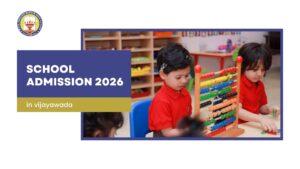
Choosing where a little one begins shapes far more than a timetable — it builds confidence, wonder, and how a child feels about learning for years afterward. At MSR, pre-primary and KG admission is treated as the start of a child’s future, not a formality to get through.
Parents beginning the search for pre primary and KG enrolment in the city for 2026 usually share the same worry: how do you tell a genuinely good option from one that just looks polished in photographs? These early decisions feel especially high-stakes because they’re often a family’s first-time experience with a formal joining process, and the terminology alone — enrolment steps, eligibility for preschool, required paperwork — can feel confusing on a first pass. MSR’s pre-primary stage focuses on play-based learning delivered through activity rather than pressure, so a parent new to the process can walk in without needing to already know the jargon. This guide covers what to expect, what to check, and how MSR approaches the earliest years.
MSR’s pre-primary and KG intake for the 2026-2027 academic year is open now, with nursery typically welcoming children aged 3 to 4 years and LKG and UKG (kindergarten) following in sequence. This early track centres on play-based activities that build early literacy, motor skills, and social confidence ahead of what comes next. Parents should confirm the exact age cutoff and paperwork directly with the office, since cutoff dates can shift slightly each year.
Why Early Admission Decisions Matter So Much: MSR vs. a Typical Play School
Pre-primary enrolment matters because the earliest years quietly set a child’s habit around learning itself — whether it feels like a place of discovery or one of pressure. Vijayawada has grown into a city with a genuine range of early-years options, and that range makes the decision feel bigger than it needs to. Many families weighing their options want the same reassurance: real supervision and real learning, not just décor.
A good early years stage does more than fill a morning; it builds essential skills — listening, sharing, early language, fine motor control — that make the next stage easier later on. These years are a crucial window for developmental growth, and MSR treats this stage as a foundation to nurture and enrich carefully rather than rush through, which is part of why its early approach stays consistent year to year rather than chasing trends.
The best early childhood education doesn’t look like a lesson at all — it looks like play, but underneath it, a child is quietly building the exact skills she’ll need in Class 1.
How to Choose the Best Preschool: MSR’s Structured Learning Process
Parents should check three things before choosing the right preschool: how the day is actually organised, how experienced the teaching team is, and how safe the physical space feels. A leading preschool answers all three without parents having to ask twice.
MSR’s pre-primary section follows short, varied activities rather than long stretches of seated work, since attention spans at this age genuinely don’t support anything else. Rooms are designed so a young learner settles in comfortably and quickly, with a team of early childhood educators who bring years of experience working specifically with this age group rather than general staff repurposed for younger children.
What Facilities Support Early Learning at MSR?
A good facility for this age group looks different from a senior classroom — softer furniture, safer play equipment, and constant visibility for staff. MSR’s pre-primary areas are monitored with CCTV throughout the day, alongside child-height fixtures and dedicated play corners, so daily activity stays both engaging and supervised.
Beyond the classroom, MSR’s campus facilities support the same nurturing approach — open areas for movement, shaded corners for quieter activities, and washrooms scaled to younger children rather than adapted from older sections.
Comparing Preschools in Vijayawada
| Factor Basic Evaluation Informed Parent Evaluation | ||
|---|---|---|
| Daily Routine | Assumes any timetable works | Checks how the day balances play, rest, and guided activity |
| Teaching Team | Looks only at total staff count | Confirms teachers have real early-years experience |
| Safety | Notices a locked gate | Checks security coverage and staff-to-child ratios |
| Learning Focus | Focuses on early reading and writing alone | Looks at well-rounded, age-appropriate skill building |
| Transition | Ignores what comes after | Considers how smoothly this stage leads into what’s next |
What Does Recent Research Suggest About Early Learning?
Recent research on this topic consistently points to the same conclusion: the years before children begin formal classes influence a child’s later learning and social outcomes more than almost any other single stage. Skills like self-regulation, early language exposure, and guided social exchange, when introduced through purposeful play rather than rote drills, tend to predict smoother transitions into what comes next.
Researchers in this field increasingly emphasise that a joyful, low-pressure learning experience early on supports critical thinking and creativity later, rather than working against readiness. That’s part of why an approach built around exploration, not early testing, tends to serve future development better over time.
MSR’s Admission Process for Pre-Primary and KG
Getting a seat here is intentionally simple: an enquiry, a paperwork check, and a short, informal interaction with the child rather than a formal test — appropriate for an age group where a written exam would tell parents very little. Families are encouraged to make an informed choice by visiting the campus before finalising anything.
Visiting in person lets parents see the actual room environment, meet the pre-primary team, and ask questions specific to their child, which matters more at this stage than at any later one. MSR Admissions can confirm exact dates and current-session availability for this stage.
Documents Required for This Stage
Paperwork for this stage typically includes the child’s birth certificate, address proof, passport-size photographs, and any prior records if the child is transferring mid-year. Parents are advised to keep both originals and copies ready during the enquiry stage, since verification is usually quicker when everything is on hand the first time.
Exact requirements can vary slightly by year, so confirming the current list directly with the front office before the visit saves a return trip.
A child doesn’t need to already read or write before nursery — what actually predicts a smooth start is curiosity, comfort separating from a parent for a few hours, and a genuine interest in other children.
How MSR’s Right Learning Programme Prepares Young Minds for Higher Classes
MSR prepares children for what comes next by treating pre-primary as the first stage of one continuous learning journey rather than a separate, disconnected phase. The same campus, and often familiar staff, carry a child through the early years and into primary, so the jump into Class 1 feels like a natural next step rather than a fresh start.
This continuity supports one broader goal: raising confident, curious learners early enough that pressure never has to substitute for genuine interest later on. See MSR’s next stage to see how the early years connect to what comes next.
Why a Convenient Locality Matters for This Stage
For a child this young, a short, predictable commute matters more than it might for an older student — a long drive at either end of the day eats into rest and family time disproportionately. MSR’s location in an easy-to-reach part of the city makes it practical for families across several surrounding areas and other parts of Andhra Pradesh, not only the immediate neighbourhood.
Being close to home also means pickups and drop-offs stay manageable for parents juggling their own routines, which quietly reduces a lot of first-week stress for both sides.
Every young learner settles at a different pace — our aim in those first weeks isn’t to rush that process, it’s to make sure each child feels safe enough to move through it in their own time.
Explore Your Next Step With MSR
Choosing a preschool is rarely just about a single factor — it’s daily routine, teacher experience, safety, and how the stage connects to what comes next, all considered together. MSR’s approach for pre-primary and KG for the coming year is built around that full picture rather than any one selling point, with families across the region choosing it for the same reasons year after year: consistency, genuine care, and a setting where a young child can be curious without being rushed — the kind of steady trust that has made MSR one of India’s more established names among the region’s families.
For families ready to move forward, the next step is simple: reach out, ask questions, and see the rooms in person before deciding. Admission today is open across the pre-primary and KG stages for the 2026-27 session, and the office is glad to ensure every parent new to the process understands exactly what to expect. Contact MSR to begin the enquiry, or take a look at student life at MSR to get a feel for the campus before your visit.
What Vijayawada Families Search For: Kindergarten in Vijayawada and Early Education
Frequently Asked Questions
Age Criteria and Admission Age: What Is the Age for Nursery Admission at MSR?
MSR’s intake generally follows the common entry norms used across early learning centres in the city, with children typically eligible between 3 and 4 years old as of the year’s cutoff date. Since exact cutoffs can shift slightly, parents should confirm the current figure directly with the office.
What paperwork is needed for pre-primary joining?
Families are generally asked for the child’s birth certificate, recent passport-size photographs, and address proof, with any previous records needed only for a mid-year transfer. Bringing both originals and copies to the enquiry stage usually speeds up verification.
Is MSR Among the CBSE Schools With a Strong Curriculum?
Yes, MSR follows CBSE guidelines from the earliest years, and its pre-primary and KG stages are designed to feed directly into what comes next, so there’s no disruptive shift in teaching methods between stages.
What are the fees for nursery and KG?
Fee details vary by grade and are shared directly by the office rather than published as a fixed public list, since they can be revised slightly each year. Families are advised to request current fee information during their enquiry or visit.
How can I apply for KG enrolment for 2026?
Applying starts with an enquiry through the enquiry page, followed by a paperwork check and a brief, informal conversation with the child, after which the office confirms seat availability for the 2026-27 session.
Does MSR provide transport for pre-primary students?
Yes, MSR runs routes covering several neighbourhoods across the city, making daily commuting manageable even for younger children in the pre-primary section.
What Makes MSR a Good School Choice for Early Learning in Vijayawada?
MSR combines genuine play-based activity with an experienced early-years teaching team and a safe, closely supervised campus, all connected to a clear pathway into what comes next rather than treated as a standalone stage.
What Does a Typical Day Look Like in MSR’s Holistic Preschool?
A typical day balances short, varied activities — stories, guided play, early motor-skill exercises, and supervised social time — with regular breaks suited to a young child’s attention span, rather than long periods of seated instruction.
Can Parents Schedule a School Visit Before Finalising a Seat?
Yes, visiting before deciding is encouraged for every family, since seeing the actual rooms and meeting the pre-primary team in person makes it far easier than relying on photographs alone.
How can I get more information about pre-primary joining at MSR?
Families can reach MSR’s front office or contact page directly by phone or email to ask about current-session timings, fees, and paperwork for nursery, LKG, and UKG.